
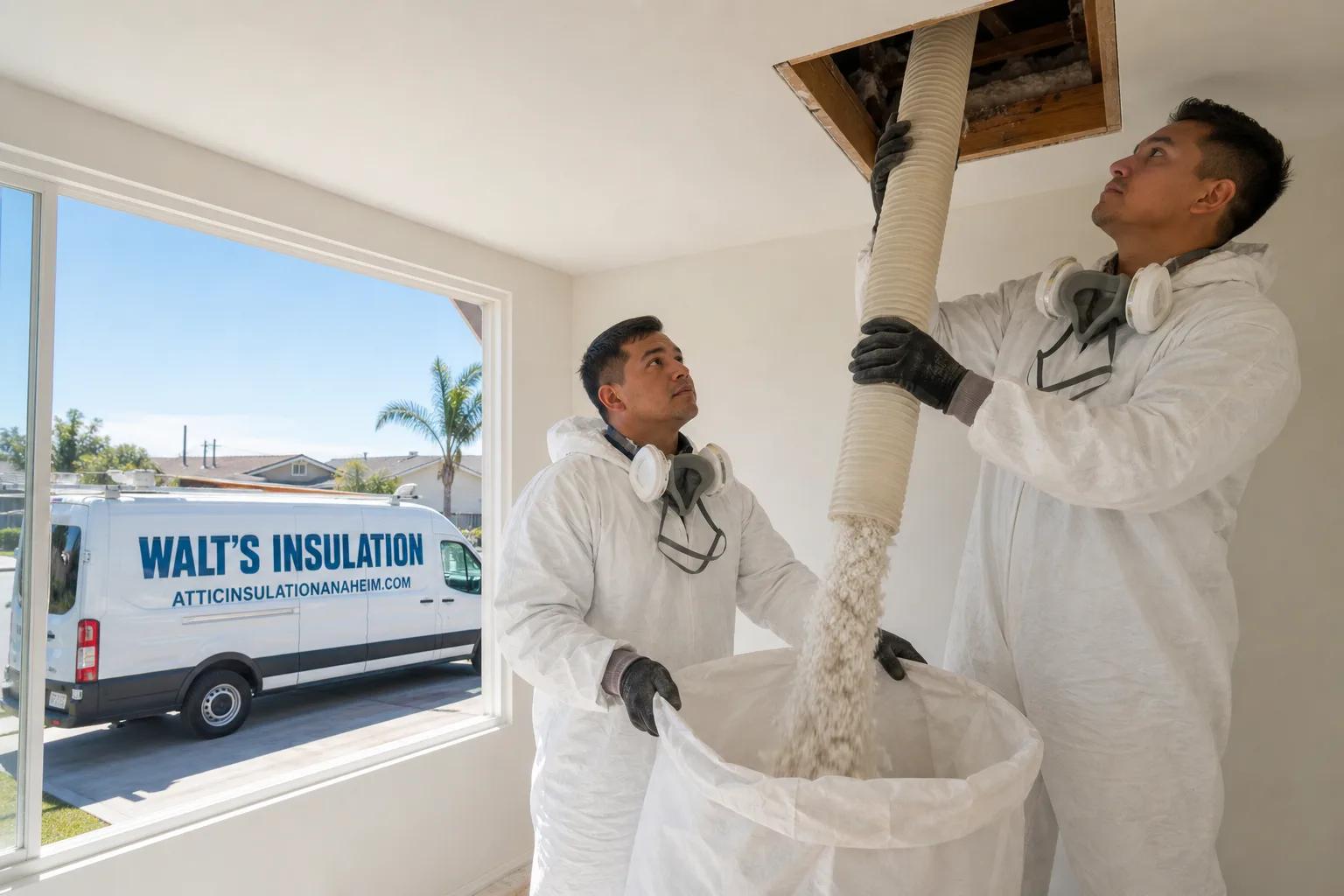
Fast, Reliable Crawl Space Encapsulation & Vapor Barrier Across Brea
Crawl space encapsulation in Brea typically runs $4,800 to $11,500 depending on square footage, access clearance, and whether you’re adding insulation or a dehumidifier. Most Brea jobs wrap up in one to three days. If you’re smelling musty air on the first floor of a Country Hills tract home or your floor joists in Blackstone are showing condensation, you need a real assessment, not a phone quote. Walt’s Insulation has been fixing crawl spaces since 2000, and we answer the phone at (657) 214-8224 with a live person every time. Brea is our backyard, and we know what these crawl spaces do.
Why Walt’s Insulation Is Brea’s Preferred Crawl Space Encapsulation & Vapor Barrier Company
We’re the one down the road, not an 800 number. Walt’s Insulation is locally owned and owner-operated, with a published address and license number. Walt Brenner started this company 25 years ago, and he still signs off on the Done Right Promise: if it’s not done right, we make it right, no runaround. That lifetime workmanship guarantee means a Brea homeowner isn’t gambling on a subcontracted crew that disappears after the check clears.
Our technicians are background-checked and uniformed, so when one of our trucks pulls up to your home near Carbon Canyon or off Lambert Road, you know exactly who’s walking in. Brea homeowners tell us the same thing over and over: they called three companies, got three vague estimates, and then Walt’s showed up with a moisture meter and a straight answer. We show up when we say we will. No trip charge inside the county. A free second opinion on any written estimate. And a permanent 10% discount for seniors and veterans, always.
Our Crawl Space Encapsulation & Vapor Barrier Services in Brea
Our Crawl Space Encapsulation & Vapor Barrier team handles every part of the crawl space, from the ground up. Here’s what that looks like for a Brea home.
Crawl Space Vapor Barrier
A proper vapor barrier in Brea starts with heavy-duty 12-mil reinforced poly, not the builder-grade 6-mil sheeting that came with most 1970s tract homes. That thin stuff tears at the seams and lets soil moisture saturate your insulation. We lay the barrier up the foundation walls, secure it with mechanical fasteners, and tape every seam. In Brea’s Climate Zone 10, the soil under your house gets hot and dry in summer but still carries moisture from winter rains. The barrier has to handle both.
Crawl Space Encapsulation
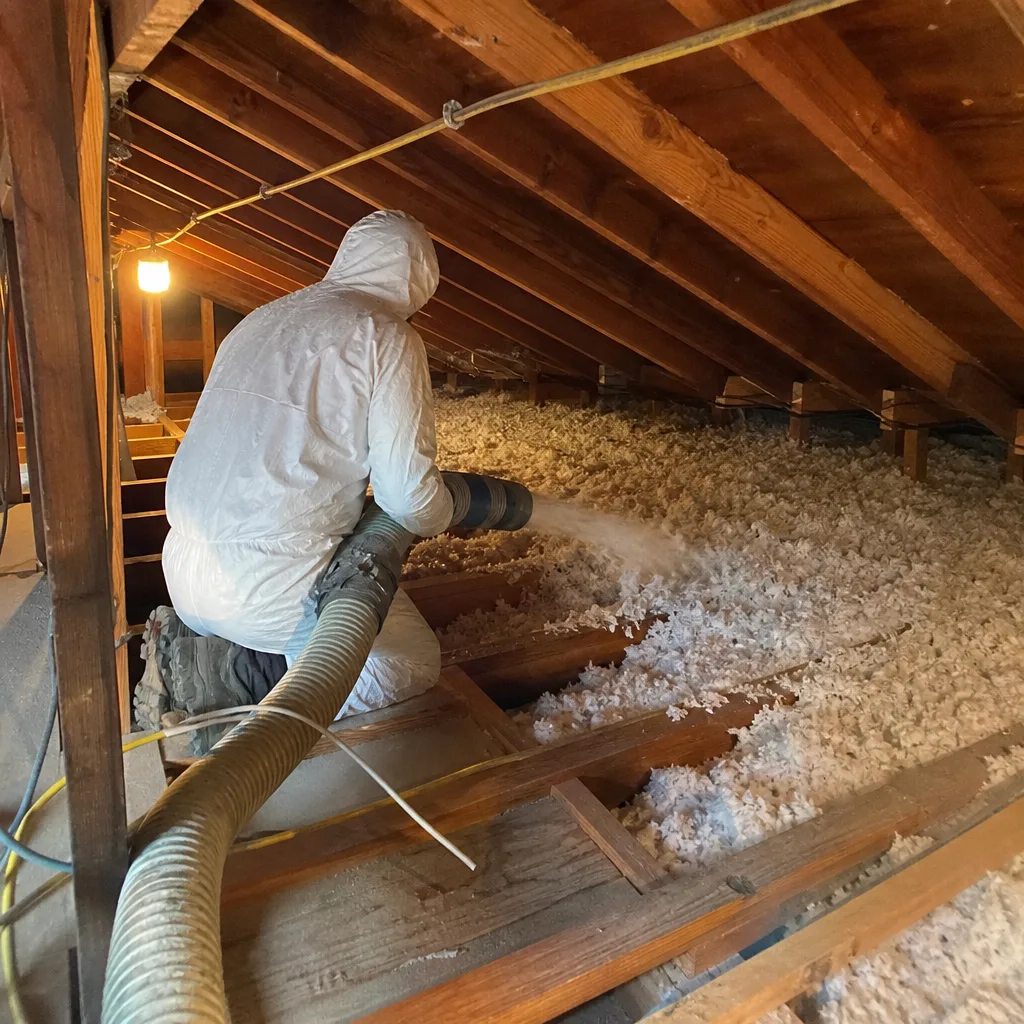
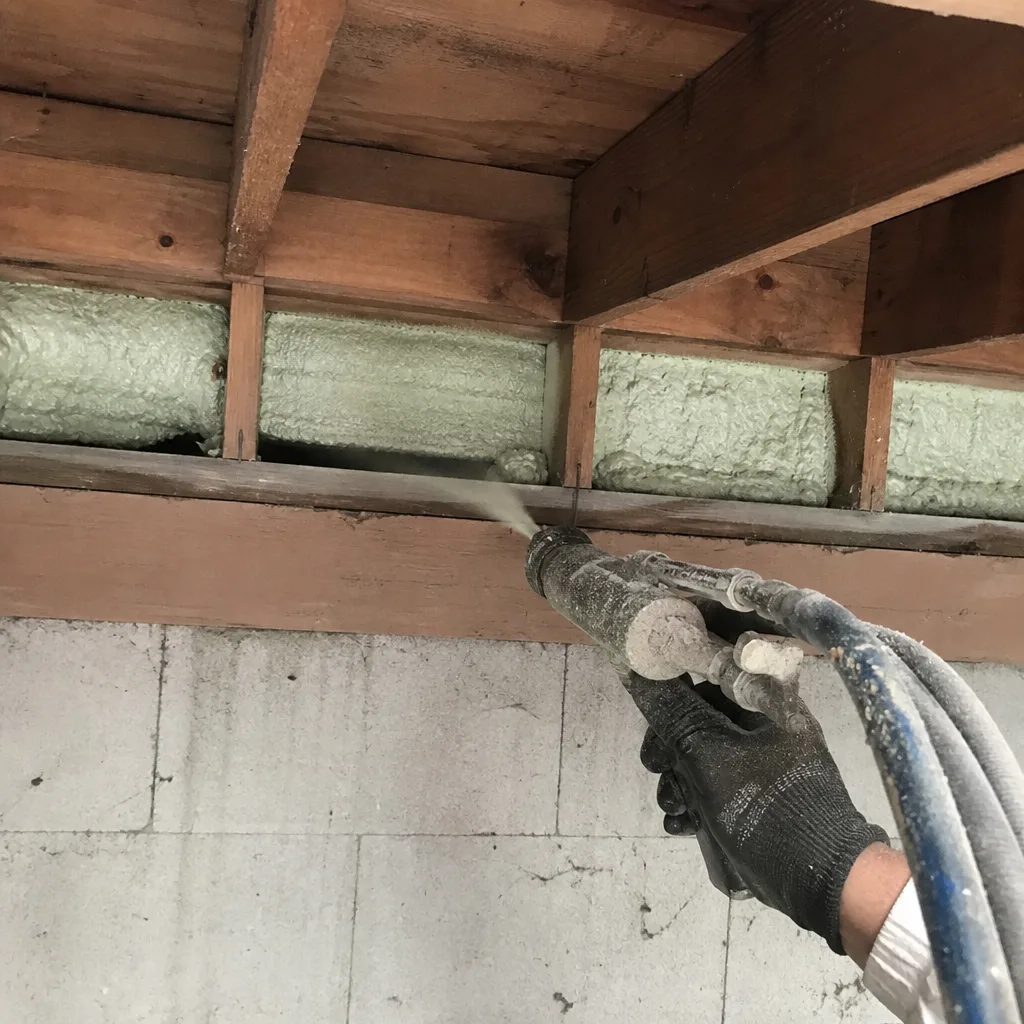
Full encapsulation seals the entire crawl space: vapor barrier on the floor and foundation walls, closed-cell spray foam at the rim joists, sealed vents, and a dehumidifier sized for the space. In Brea hillside neighborhoods near Olinda, open pier-and-beam crawls collect drainage from uphill lots. Encapsulation is the only fix that stops that standing water from turning into wood rot and mold. We’ve been doing this since 2000, and the difference in air quality is immediate.
Crawl Space Insulation
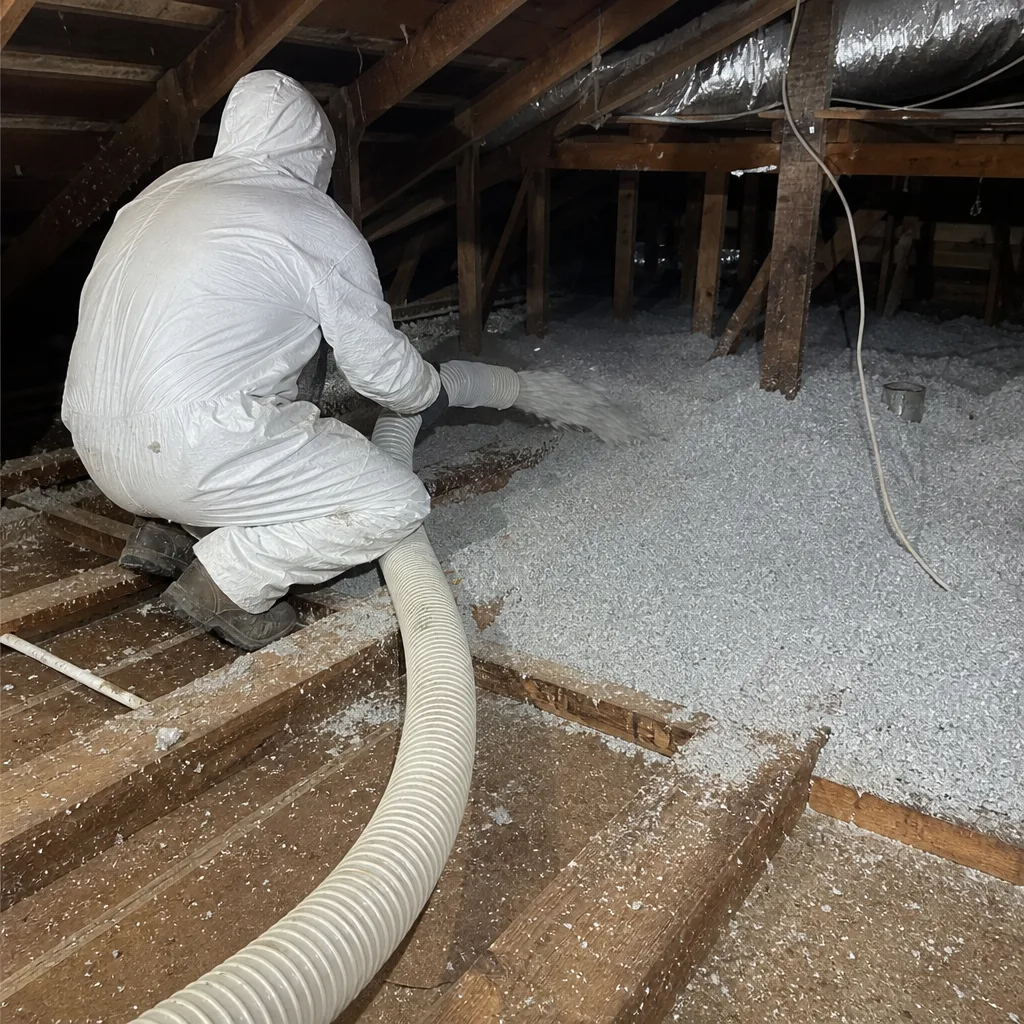
Insulating a crawl space in Brea isn’t the same as insulating one in Anaheim. The floor system here gets hot because Brea sits inland at the base of the Puente Hills, pushing summer highs 8 to 12 degrees above coastal OC. We install closed-cell spray foam or rigid foam board at the rim joists and sometimes under the floor deck, depending on whether you’re encapsulating or not. Johns Manville and Owens Corning products are what we reach for when we chart moisture, temperature, and air movement in a Brea crawl space.
Crawl Space Moisture Control
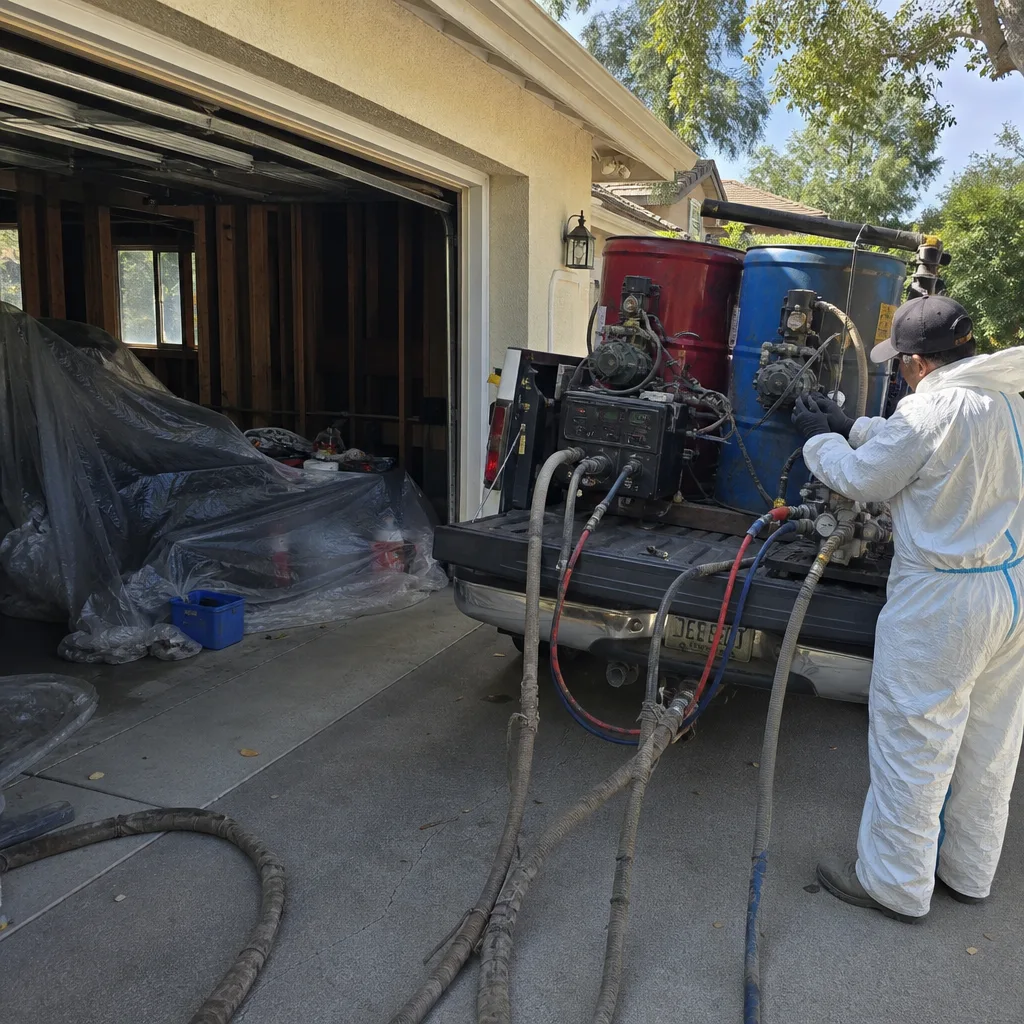
Moisture control starts with finding where the water is coming from. In Brea, that’s often a failed vapor barrier, an unsealed crawl space vent, or drainage from an uphill neighbor’s lot. We use moisture meters to map the floor joists, then decide: repair the barrier, install a sump pump, add a dehumidifier, or a full encapsulation. A 1978 two-story on Morning Dove Drive in the Country Hills tract came to us with standing condensation on the joists and musty odors upstairs. We found the original 6-mil poly torn in a dozen places, fiberglass batts sagging against wet soil, and no rim-joist sealing. We removed the failed material, installed a 12-mil reinforced barrier with taped seams, sealed all vents, and added closed-cell spray foam at the band joists. Moisture readings dropped from 22% to under 8% within a week. That’s what we do for Brea homes.
What happens when you call
- 1
A real person answersNo phone trees - you reach a local pro.
- 2
You get an upfront price rangeHonest numbers before anyone is dispatched.
- 3
A background-checked tech heads outLicensed & insured, dispatched right away.
- 4
You approve before work beginsNothing starts until you say go.
Trusted Brands We Service in Brea
We work with materials we can stand behind: Owens Corning, Johns Manville, Demilec, and GreenFiber, depending on what the job calls for. We stock parts local so Brea customers aren’t waiting on a UPS truck from Texas when they need a vapor barrier repaired or a dehumidifier replacement. Fast turnaround, no excuses, and the right product for this climate. Walt’s Insulation doesn’t sell one-size-fits-all anything.
Common Crawl Space Encapsulation & Vapor Barrier Problems We See in Brea Homes
- Builder-grade 6-mil poly sheeting tears and sags. In Brea’s 1960s through 1980s tract homes, the original barrier is often shredded at the seams. Soil moisture moves straight through into fiberglass batts, and that musty smell starts creeping into your living room.
- Unsealed crawl space vents let Santa Ana winds pressurize the space. Carbon Canyon (SR-142) funnels wind straight into hillside neighborhoods, making vapor barriers balloon or detach. The same pressurization pulls radon and soil gases up through the floor.
- Hillside drainage overwhelms open crawl spaces. Homes near Olinda and Carbon Canyon sit below uphill lots. Runoff collects under the floor, outruns the barrier, and rots joists. Encapsulation with proper drainage is the fix, not another patch job.
- Uninsulated rim joists cook the crawl space in summer. Brea’s Zone 10 heat pushes attic temps past 140°F, and the same sun bakes south-facing foundation walls. Without spray foam at the band joists, that heat radiates into your floor system and drives up cooling costs.
Pricing for Crawl Space Encapsulation & Vapor Barrier in Brea, CA
Here’s what Brea homeowners can expect to pay, based on what we actually see in this market. A vapor barrier replacement alone runs $2,200 to $4,500 for an 800 to 1,200 square foot crawl space. Full encapsulation with a dehumidifier lands between $6,800 and $13,000. Crawl space insulation, depending on foam board versus closed-cell spray, adds $1,800 to $5,400. A cleanout and moisture assessment runs $700 to $1,500. Factors that move the needle: access clearance on hillside lots, standing water that needs drainage correction before we can install anything, and the size of the rim joist area. Walt’s gives free estimates, and we’ll write down the number so you can compare. No trip charge inside the county. Call (657) 214-8224 and we’ll schedule a moisture reading at your Brea home.
We Also Serve Cities Near Brea
Our crews work across northern Orange County, so if you’re in La Habra, Placentia, Yorba Linda, or Anaheim, we can be at your door with the same fast scheduling. Walt’s Insulation is the Crawl Space Encapsulation & Vapor Barrier in Brea team locals call first, but our service area reaches wherever a homeowner is tired of smelling their own crawl space.
Serving Brea, CA - Our Local Coverage Area
We’re based in the Brea area and know this community well. Use the map below to see our service coverage - if you’re nearby, we can almost certainly help.
FAQs - Crawl Space Encapsulation & Vapor Barrier in Brea
Brea falls within California Energy Commission Climate Zone 10, the same hot-inland designation as Riverside, not the milder Zone 8 that applies to Anaheim or coastal cities. That means the soil under a Brea home stays warmer year-round and swings through bigger humidity changes between winter rains and summer heat. A vapor barrier here has to resist not just moisture migration but also radiant heat rising from superheated floor systems. So we spec heavier poly, seal rim joists with closed-cell foam more aggressively, and often recommend a dehumidifier even for smaller crawl spaces. Coastal OC contractors who don’t know the zone difference routinely under-spec these jobs. Call (657) 214-8224 for an assessment based on where your house actually sits.
Yes. Country Hills is Brea’s 1960s through 1980s stucco-over-wood-frame tract stock, and those crawl spaces were built with 6-mil poly sheeting that fails at the seams and laps within 15 to 20 years. Hot, dry summers bake the sheeting until it becomes brittle, then winter rains drive soil moisture up through every tear. The result is sagging fiberglass batts, condensation on floor joists, and that musty odor that never quite leaves the first floor. Full encapsulation with a 12-mil reinforced barrier and sealed vents solves it. We’ve done this retrofit on dozens of homes in the tract.
Carbon Canyon (SR-142) funnels northeast Santa Ana wind events directly into Brea’s hillside neighborhoods, and those winds pressurize crawl spaces through unsealed vents and gaps in the foundation. That pressure differential pulls radon and soil gases up through floor cracks, and it makes thin vapor barriers balloon off the ground or tear at their fasteners. Encapsulation seals the vents and fastens the barrier mechanically, so the crawl space stops acting like a wind sock. If your home sits along the Carbon Canyon corridor, the urgency is real, not hyped. Call (657) 214-8224 and we’ll show you what the wind is doing to your floor system.
Blackstone homes from the 2000s and 2010s were built to modern Title 24 energy standards, so they don’t need the same major retrofit as a Country Hills tract home. But that doesn’t mean the crawl space is problem-free. We still see builder-grade vapor barriers that have shifted or torn during construction, rim joists insulated only with fiberglass batts that sag and leave gaps, and no dehumidifier controller on the zone system. For a Blackstone home, encapsulation usually means upgrading the barrier to a 12-mil reinforced material, air-sealing the rim joists, and adding a compact dehumidifier. It’s a lighter touch, but it prevents the same slow moisture damage over the next 20 years.
Yes, and it’s a bigger deal in Brea than people expect. Brea’s inland position at the base of the Puente Hills pushes summer highs 8 to 12 degrees above coastal Orange County, which means your floor system absorbs heat from the crawl space all afternoon. A proper vapor barrier keeps moisture out, which keeps insulation dry and functioning. Dry insulation performs. Wet insulation doesn’t. When we pair a vapor barrier with rim-joist air sealing, homeowners typically see cooling-load reductions in the range of 5 to 12 percent. The barrier’s job is moisture, but the second-order effect is your AC working less. Call (657) 214-8224 for a free estimate and we’ll walk you through what your specific crawl space is costing you.
Written by Walt Brenner, Owner at Walt’s Insulation, serving Brea since 2000.