
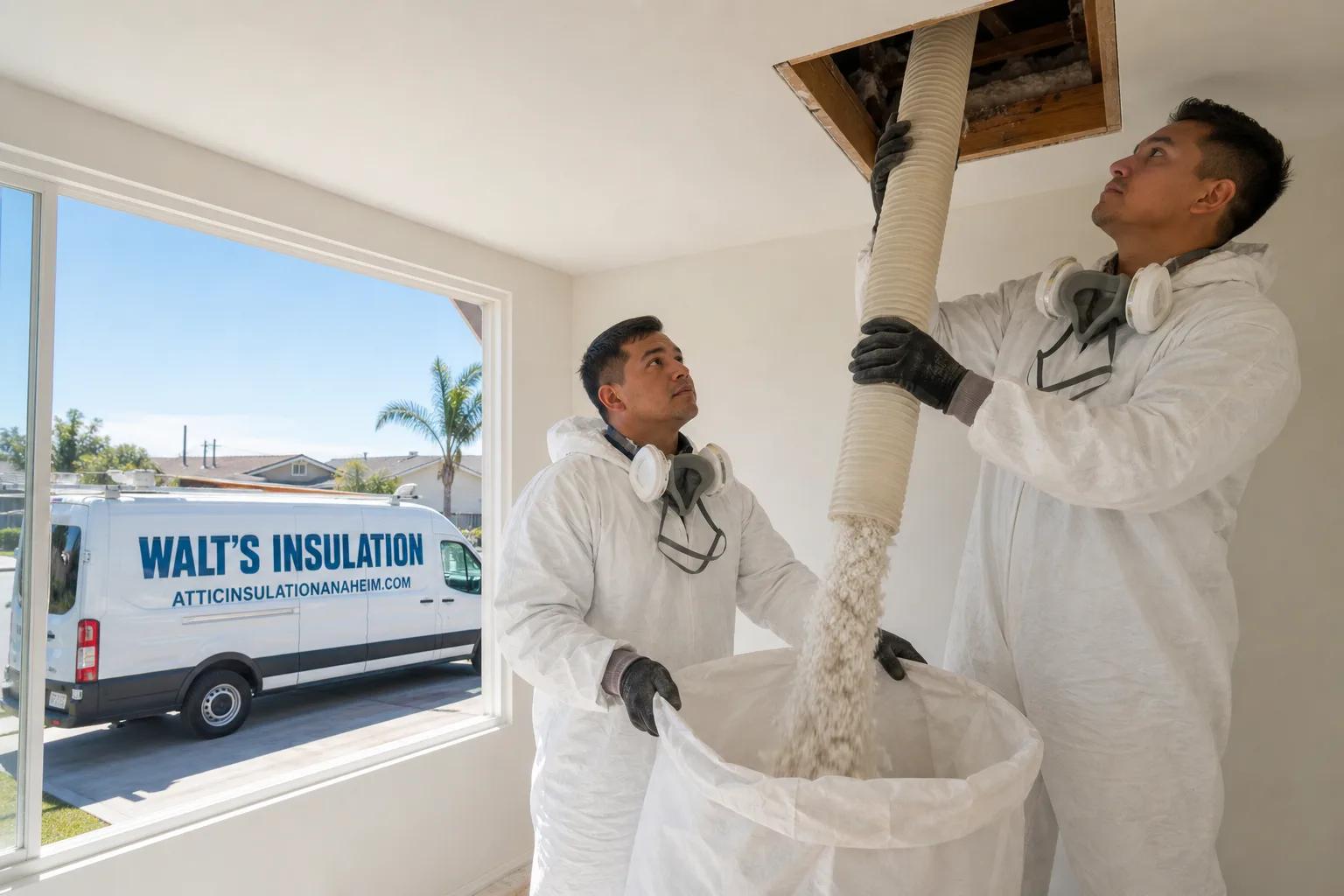
Fast, Reliable Attic Insulation Across Anaheim
Attic insulation in Anaheim homes runs $1,200-$4,800 for most single-family houses, depending on attic access, square footage, and whether we’re topping up existing material or removing decades-old batts first. We respond to Anaheim calls within 60-90 minutes during business hours and schedule next-day appointments across the city, from the flatlands west of the 5 to the hillside streets east of the 57. If your July electric bill feels like a second mortgage, call Walt’s Insulation at (657) 214-8224 and we’ll tell you honestly what’s going on up there before we quote a dime.
Walt Brenner founded this company in 2000 because he kept seeing the same failure in Anaheim’s older neighborhoods: attics that were “insulated” on paper but cooked through every summer. We know these houses. We know where the original batts have slumped to nothing. And we know exactly what it takes to make a 1963 tract home off Brookhurst Street hold its cool in August.
Why Walt’s Insulation Is Anaheim’s Preferred Attic Insulation Company
Anaheim homeowners call us because we answer the phone. Not a call center in another state. A live person in our office, 24/7. That matters when your air conditioner has been running since 6 a.m. and the upstairs still won’t drop below 82. We’ve had Anaheim customers tell us they called three other companies and got voicemail every time. We pick up.
We’re locally owned and owner-operated, with a published address and license number. Walt Brenner still walks jobs personally. The technicians who show up at your door are background-checked, uniformed, and employed by us directly, not subcontracted from a crew you’ve never met. Anaheim homeowners see the same faces on the job that they saw on the estimate.
Every job carries the Done Right Promise. Lifetime workmanship. If it’s not right, we make it right. No runaround, no warranty phone tree, no arguments. That’s the whole promise. It’s why a big share of our Anaheim work comes from repeat customers and neighbors who heard about us across a fence.
We also stand behind our pricing. Free second opinion on any written estimate from another contractor. No trip charge anywhere in our service county. And a permanent 10% discount for seniors and veterans. Not a seasonal gimmick. That’s just how we work.
Our Attic Insulation Services in Anaheim
Blown-In Attic Insulation
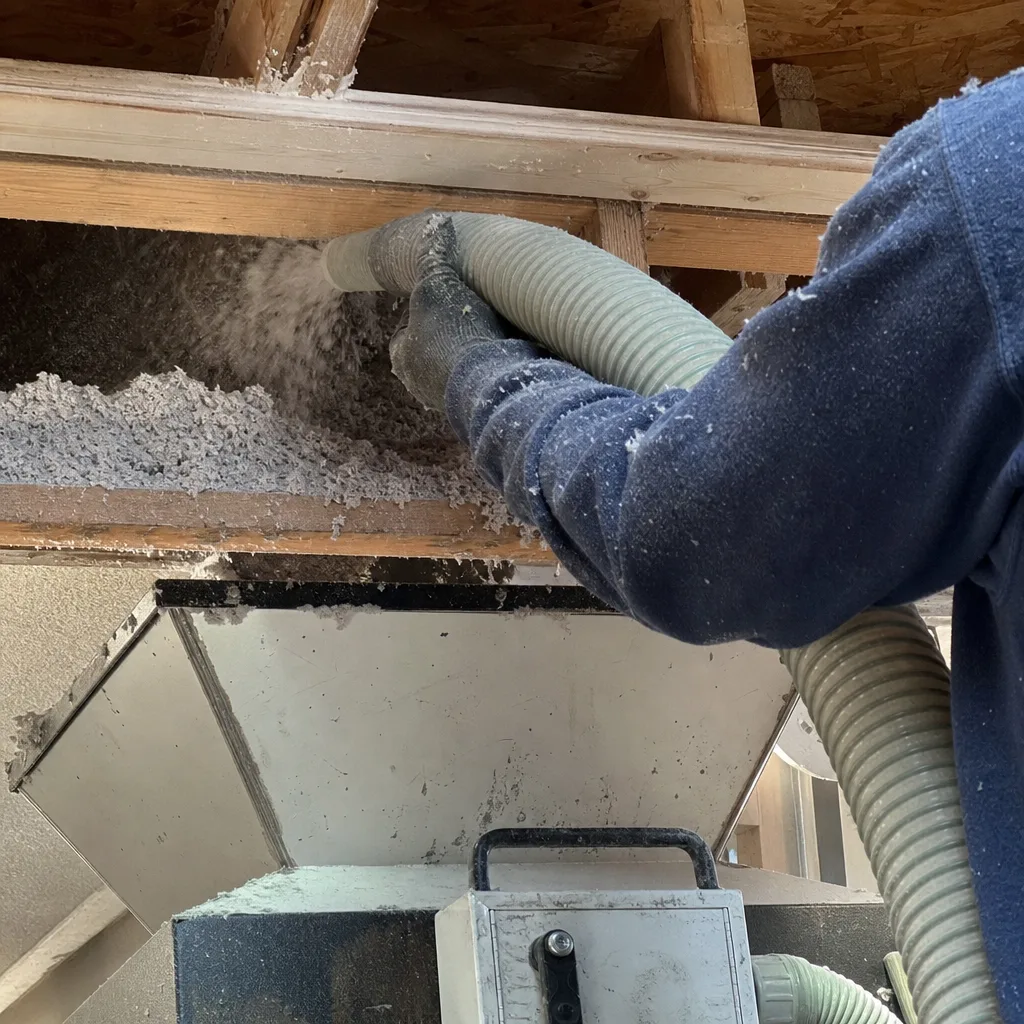
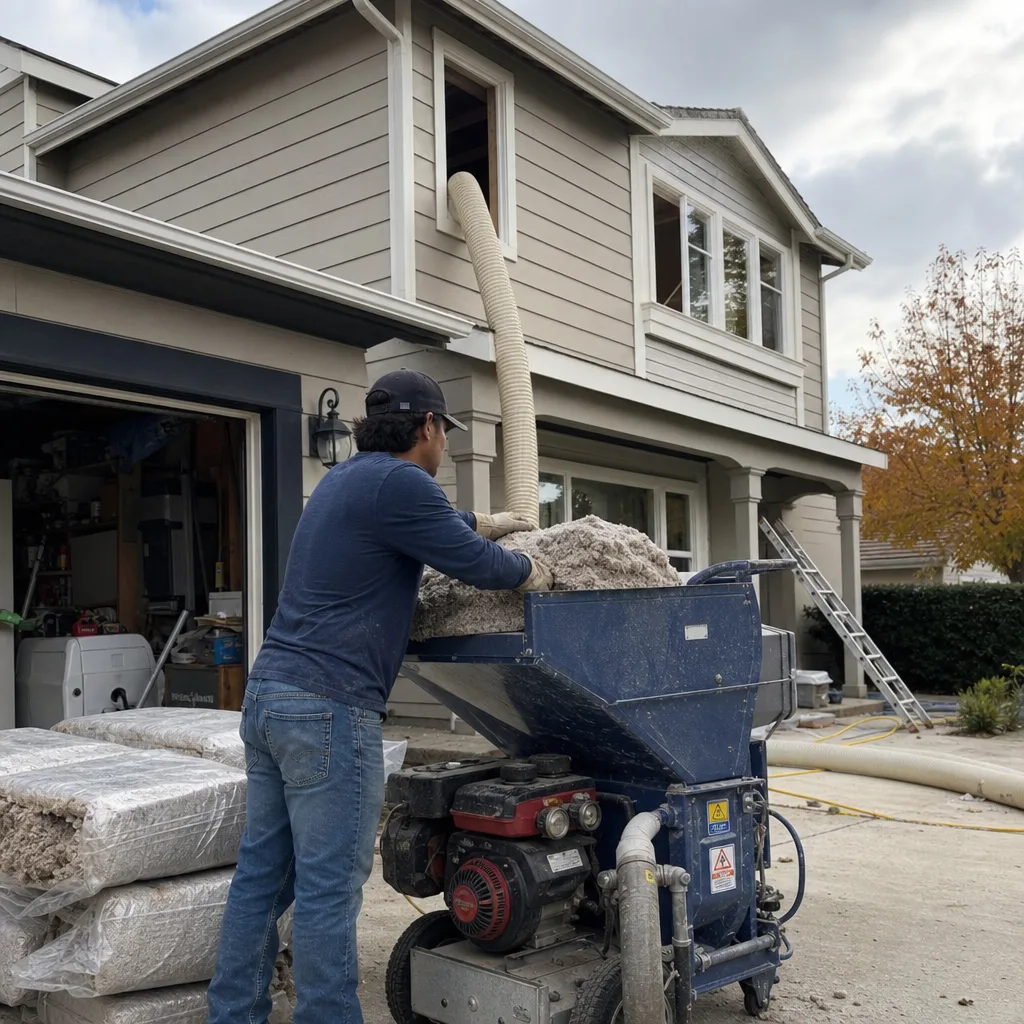
For Anaheim’s flat and low-slope tract home roofs, blown-in insulation is the workhorse. We blow Owens Corning or GreenFiber cellulose to R-38 or higher, filling every cavity and settling into the nooks that batt insulation never touches. In a 1,100-square-foot west Anaheim rancher, a full blow-in typically takes our crew half a day. The difference in upstairs comfort, especially during a Santa Ana heat spike, is immediate.
Attic Batt Insulation
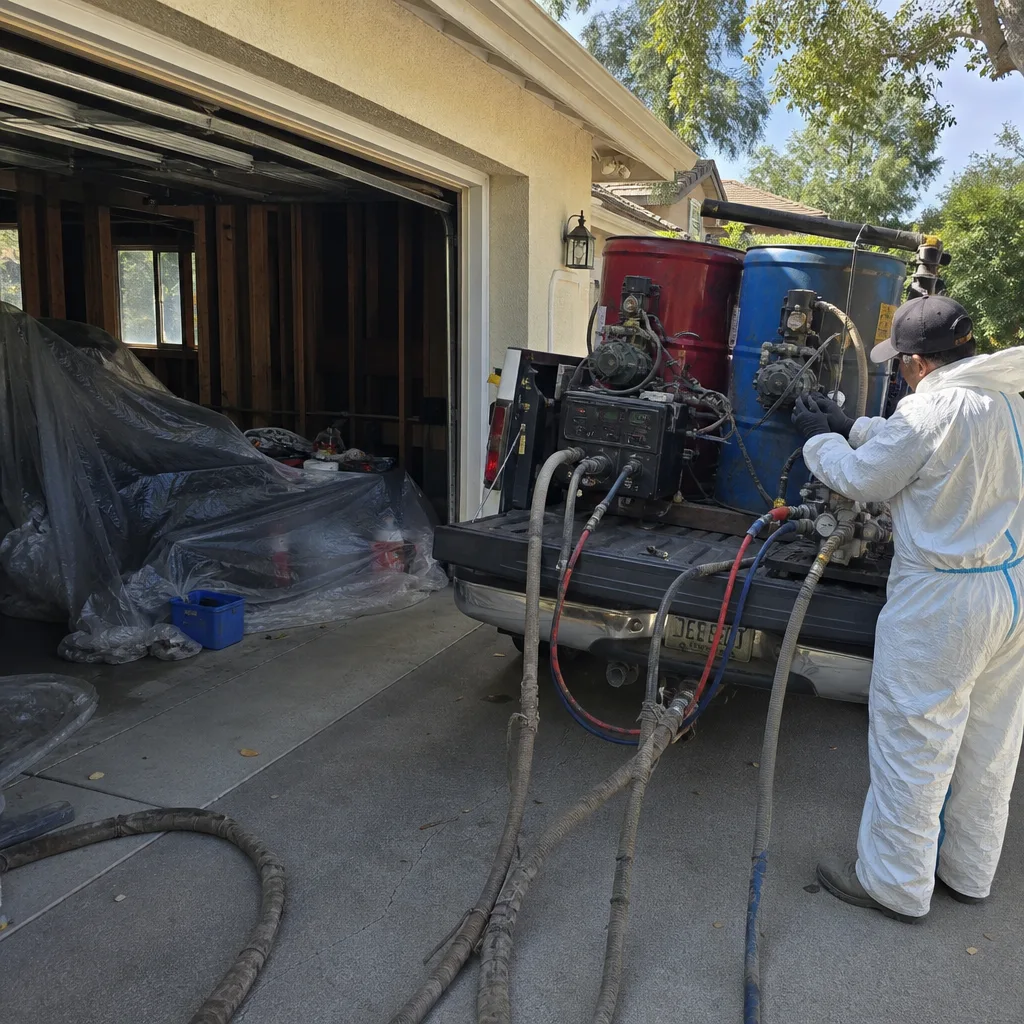
Batt insulation still has a role in Anaheim, especially in Anaheim Hills homes with vaulted ceilings and framed rafter bays where blown material won’t hold. We install Knauf and Johns Manville fiberglass batts in walls-turned-cathedral-ceiling assemblies and in knee walls. Properly fitted, stapled, and cut around can lights and plumbing vents, batts do the job when access is tight and cavities are irregular.
Attic Insulation Top-Up
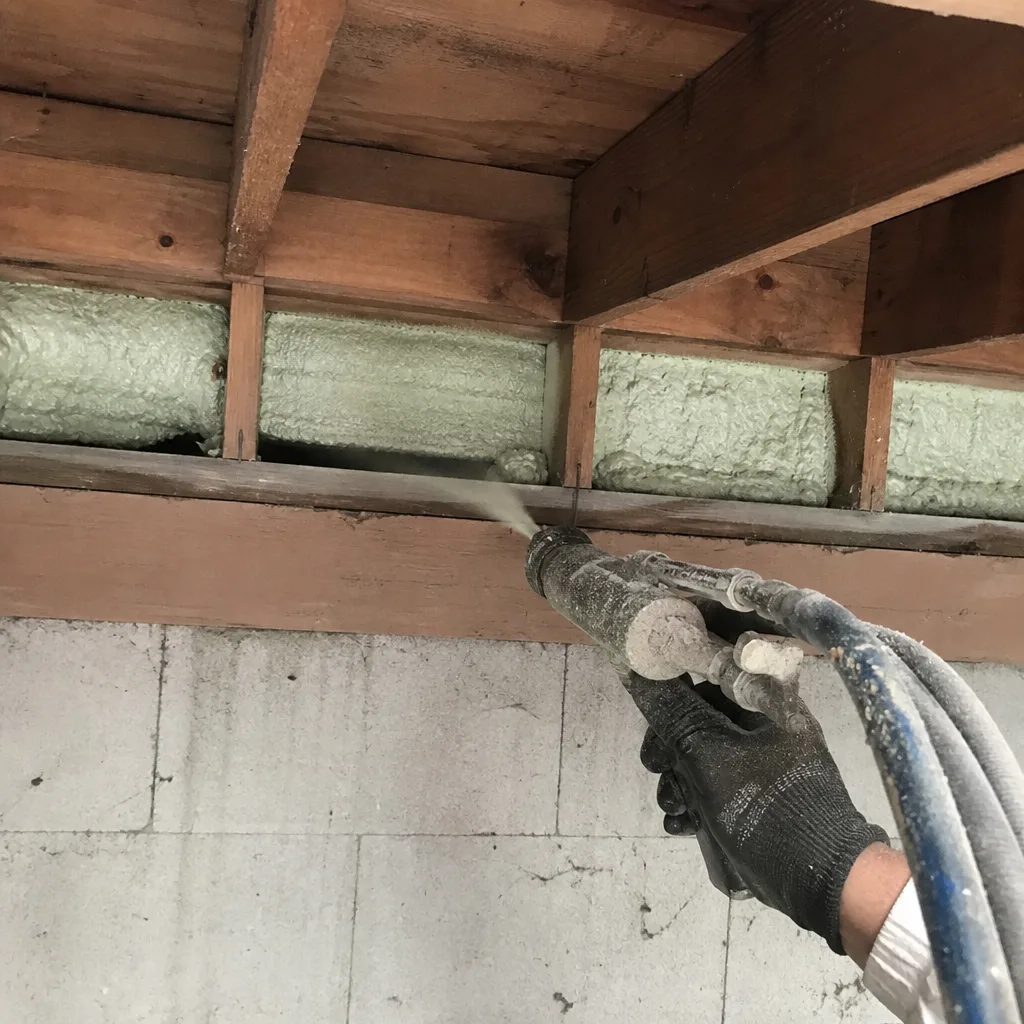
Many Anaheim attics have some insulation from the 1980s or 1990s that’s better than nothing but well short of what Title 24 now expects. A top-up lays new blown-in material directly over the old, bringing the effective R-value up without the cost or mess of a full removal. We check the existing layer first; sometimes the old batts are so compacted we recommend removal instead. We’ll tell you which path makes sense and show you why.
Attic Insulation Replacement
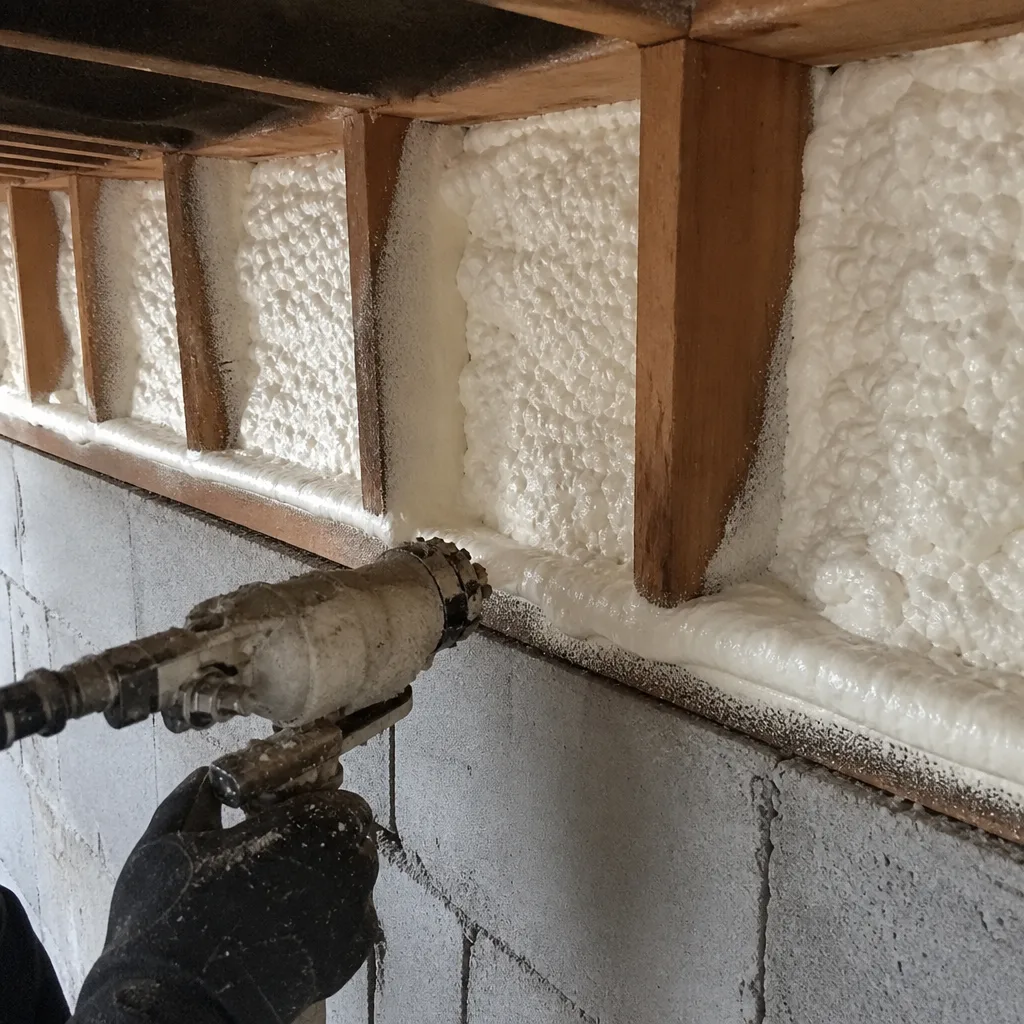
This is the big one for Anaheim’s original tract housing stock. We remove old fiberglass batts that have compressed to R-8 or worse, air-seal the top plates and penetrations, and install fresh material to current code. A full replacement on a 1960s single-story Anaheim home usually runs $2,800-$4,800. It’s the single most effective thing you can do for energy comfort in a house that predates Title 24. More on what we found in a Brookhurst Street home last week in a moment.
Attic Baffles & Ventilation Prep
Insulation without airflow creates moisture problems in Anaheim’s variable climate, especially when winter rains leave damp air trapped against roof sheathing. We install or repair baffles at every eave, verify soffit and ridge venting is actually moving air, and prep the attic so your new insulation performs for decades, not just the first season.
What happens when you call
- 1
A real person answersNo phone trees - you reach a local pro.
- 2
You get an upfront price rangeHonest numbers before anyone is dispatched.
- 3
A background-checked tech heads outLicensed & insured, dispatched right away.
- 4
You approve before work beginsNothing starts until you say go.
Trusted Brands We Service in Anaheim
We install materials we trust, and we tell you exactly what’s going in. That means Owens Corning and Johns Manville fiberglass, Knauf batts, and GreenFiber cellulose. We keep common product lines stocked for Anaheim jobs, so if your estimate is approved on a Tuesday, we’re often cutting the trapdoor open by Thursday. No one from a national chain is going to tell you that your 1960s low-slope roof needs a different venting strategy before they blow insulation. Our crew will. That’s the difference between installing material and solving a problem.
Common Attic Insulation Problems We See in Anaheim Homes
- Original 1950s-1970s fiberglass batts compressed to nothing. We regularly measure R-8 or less in attics that were theoretically insulated when JFK was in office. Forty years of gravity, dust, and occasional roof leaks flatten fiberglass until it does almost nothing.
- Attic temperatures above 150°F in low-slope 1960s roofs. Anaheim’s inland position means those low-pitch ranch roofs absorb heat all day with no coastal breeze to shed it. Insulation bakes, loses loft, and stops resisting heat just when you need it most.
- Santa Ana wind-driven heat spikes in October and November. When fall winds push Anaheim into the 90s, attics that were tolerable all summer suddenly become ovens, and HVAC systems flip back to cooling with no buffer above the ceiling.
- Anaheim Hills WUI code requirements. Homes on the eastern slopes fall inside California’s Fire Hazard Severity Zone, which means attic vent screens, ember-resistant detailing, and non-combustible insulation around penetrations are required by code. Flatland west Anaheim jobs never face this; Hills jobs always do. We handle it every week.
Pricing for Attic Insulation in Anaheim, CA
Here are real numbers for Anaheim’s market, based on typical single-family homes we see weekly. A blown-in top-up on a 1,000-1,200-square-foot home runs $1,200-$1,800. A full replacement with removal of old batts, air-sealing, and new blown-in insulation to R-38 typically lands between $2,800-$4,800, with vaulted-ceiling Anaheim Hills homes at the upper end due to access complexity. Batt installation in framed rafter bays runs $2-$4 per square foot of insulated area. Baffle installation and vent prep adds $400-$900 on most Anaheim attics. Square footage, ceiling height, attic access size, and whether the existing material contains vermiculite all move the number. Call (657) 214-8224 for a free estimate. We also offer a free second opinion on any written estimate from another Anaheim contractor, so bring us their number and we’ll tell you if it’s fair.
We Also Serve Cities Near Anaheim
Our crews cover Anaheim and the surrounding north Orange County communities. If you’re in Buena Park, Stanton, La Palma, or Placentia, we’ll get to you with the same response times and the same Done Right Promise. Some of our Anaheim customers have sent us to family members in these cities, and we treat every job the same. Attic Insulation is what we do all day, and Anaheim is home turf.
The Anaheim Attic Problem Nobody Talks About
Disneyland opened in 1955, and the housing boom that followed built Anaheim from a sleepy citrus town into a mid-century suburb almost overnight. Those tract homes, from the flatlands west of Brookhurst Street to the streets south of Lincoln Avenue, were built before California’s Title 24 energy code existed. Many still carry their original fiberglass batts, and on a peak July day, attics in central Anaheim run 10-15°F hotter than the same-year homes in Huntington Beach or Newport Beach. Why? Anaheim sits inland, outside the coastal marine layer’s cooling reach, and the city’s asphalt-and-roof landscape absorbs heat all afternoon.
That means attic insulation isn’t a courtesy upgrade in Anaheim. It’s the highest-ROI envelope improvement you can make, with payback that coastal homeowners simply don’t see as fast. A shallow 1960s attic with R-8 material is leaking a double-digit percentage of your cooling load straight through the ceiling on every hot day.
Last week our crew was in a 1963 single-story tract home off Brookhurst Street in central Anaheim. The July attic temp was hitting 148°F, and the original 2-inch fiberglass batts had slumped to near zero R-value. We removed the old material, air-sealed the top plates, and blew in GreenFiber cellulose to R-38, then added radiant barrier under the low-slope roof. Peak cooling load dropped by over a third on the homeowner’s first full billing cycle. That’s not a brochure number. That’s a utility bill.
Anaheim Hills is a separate story. Those 1970s-1990s custom and semi-custom homes on the eastern slopes have vaulted ceilings, complex rooflines, and, critically, fire-safety code requirements from California’s Fire Hazard Severity Zone designation. Attic vent screens, ember-resistant detailing, non-combustible insulation near penetrations, all of it applies. A flatland west Anaheim job never touches WUI code. A Hills job always does. We’ve done enough of both to know the difference without looking it up.
Serving Anaheim, CA - Our Local Coverage Area
We’re based in the Anaheim area and know this community well. Use the map below to see our service coverage - if you’re nearby, we can almost certainly help.
FAQs - Attic Insulation in Anaheim
Attic temperatures in 1950s-1970s Anaheim tract homes routinely hit 140-155°F on peak summer afternoons, especially in low-slope roofs where there’s little air volume between the ceiling and the roof deck. We measure this with an infrared gun on nearly every estimate. If your existing insulation has degraded, that heat pushes straight down into your living space, which is why upstairs bedrooms in western Anaheim can run 8-12°F warmer than downstairs. Call (657) 214-8224 and we’ll measure yours during the free estimate.
Yes. Vaulted and cathedral ceilings in Anaheim Hills leave no accessible attic cavity above the living space, so we work from the roof side or within the rafter bays themselves. That means batt insulation fitted between rafters, often with rigid foam or spray-applied material to hit code without sacrificing ceiling height. It’s slower, more detailed work than blowing cellulose into a flat attic, and we quote it accordingly.
Yes. Homes in Anaheim Hills fall within California’s Fire Hazard Severity Zone, which triggers WUI (Wildland-Urban Interface) building code provisions. Attic vent screens must meet ember-resistance standards, penetrations need non-combustible detailing, and insulation near chaseways and flues has specific clearance requirements. We handle this on every Anaheim Hills job. If a contractor quotes you an attic job in the Hills without mentioning WUI code, call us instead.
Santa Ana wind events push Anaheim temperatures into the 90s and 100s in October and November, flipping HVAC systems back to cooling mode when everyone thought the worst was over. Without adequate attic insulation, those fall heat spikes run the air conditioner hard for days at a time, and poorly insulated attics act as heat sinks that keep radiating warmth into the house after sunset. Insulating in the fall means your home is ready for the next round of heat, not reacting to it.
If your home was built between 1955 and 1980 and never had an insulation upgrade, you can almost guarantee the original fiberglass batts are still up there, compressed and underperforming. Look for thin, gray-yellow matting lying flat between the joists, often with gaps around the edges. If you can see the top of the ceiling joists clearly, you’re under-insulated. We’ll confirm it during a free attic inspection, and give you a clear yes-or-no on whether replacement is worth it. Call (657) 214-8224 to schedule.
Call Walt’s Insulation for Attic Insulation in Anaheim
If your Anaheim home is running hot, your bills are climbing, or you suspect those original fiberglass batts have given up after sixty years of service, call us. We answer live, 24/7. Walt Brenner’s team has been doing attic work since 2000, and we’ll give you an honest answer about what’s happening in your attic, what it costs to fix, and how soon we can start. Free estimates. Free second opinions. No trip charge in our service county. The Done Right Promise on every job. (657) 214-8224.
Written by Walt Brenner, Owner at Walt’s Insulation, serving Anaheim since 2000.